

The Amur tiger (Panthera tigris altaica), also called the Siberian tiger, lives in the forests of the Russian Far East and a strip of northeast China. It is often called the largest cat on Earth. The weights below show why that label no longer fits, and the rest of this page covers where the animal lives, what it eats and what threatens it.
| IUCN status | Endangered (Panthera tigris) |
|---|---|
| Range | Russian Far East (Primorsky and Khabarovsk Krais), with a growing foothold in northeast China |
| Population | About 750 in Russia including cubs (2021 to 2022 census); 72 in China’s border national park (July 2026) |
| Adult weight (male) | About 176 kg on modern measurements; the heaviest radio-collared male weighed 212 kg |
| Adult weight (female) | About 118 kg on modern measurements |
| Lifespan in the wild | 10 to 15 years |
| Diet | Wild boar, red deer, sika deer, roe deer, occasional bears |
| Main threats | Poaching, loss of wild boar to African swine fever, conflict with people, logging roads, forest fire |
How big is an Amur tiger, really
Two sets of weights exist, and mixing them is where the “largest cat on Earth” claim comes from.
In 2005 Jonathan Slaght, Dale Miquelle and colleagues went through every published weight for a wild Amur tiger. Of 57 adult weights in the older literature, most of it written by hunters, they judged only 13 reliable. The nine males among them, all recorded before 1970, averaged about 215 kg. Eighteen males weighed by researchers since 1970 averaged about 176 kg, and 13 females about 118 kg. The heaviest male radio-collared by the Siberian Tiger Project weighed 212 kg. Weights of 300 kg and more appear in the old accounts, and the authors rated every one of them unreliable.
Bengal males weigh 200 to 260 kg, and seven weighed in Chitwan in Nepal averaged 235 kg. On present-day measurements the Bengal is the heavier tiger. Why Amur weights fell is not settled. The 2005 authors listed three possibilities: less prey and more human pressure, a habit in the old literature of recording only big animals, and the loss of genetic variety when the population shrank in the 1940s.
The coat is the clearer difference. In winter the fur on an Amur tiger’s back is 40 to 50 mm long, and on the neck and belly it can reach about 100 mm. In summer the fur on the back is 15 to 17 mm. The winter coat is also paler. No other tiger lives with months of snow.
Range: the Russian Far East and a sliver of China
Amur tigers once ranged through the Russian Far East, the Korean Peninsula and much of northeast China. Almost all now live in Russia, in Primorsky Krai and the south of Khabarovsk Krai, with a few in the Jewish Autonomous Region and Amur Region. The 2021 to 2022 census covered more than 180,000 square kilometres. Our page on tigers in Russia lists the main reserves.
A second group is growing across the border. Northeast China Tiger and Leopard National Park, piloted from 2017 and formally established in 2021, covers 14,100 square kilometres of Jilin and Heilongjiang. China counted 27 wild tigers there in 2017, 50 in 2021 and 72 in July 2026. The page on tigers in China has the detail.
Most of what is known about how these tigers live comes from one place. The Siberian Tiger Project began in 1992 in Sikhote-Alin Biosphere Reserve, a protected area since 1935, as a joint study by the Hornocker Wildlife Institute and the reserve. It later ran under the Wildlife Conservation Society and followed radio-collared tigers there for some three decades.
Population: back from about thirty animals
Around 1940 the zoologist Lev Kaplanov tracked tigers through the Russian Far East and estimated that only 20 to 30 were left, after decades of hunting and the capture of cubs for zoos. The Soviet Union banned tiger hunting in 1947.
Range-wide counts of winter tracks since then gave 415 to 476 tigers in 1996, 428 to 502 in 2005 and 523 to 540 in 2015, cubs included. The 2021 to 2022 census, announced in September 2022, reported about 750 including roughly 200 cubs. The IUCN’s 2022 assessment estimated 386 adults and subadults from camera-trap data and called the Russian population stable. The full survey history, and why the last two numbers differ, is in Russia’s Amur tiger recovery.
The scientific name is Panthera tigris altaica. Under the IUCN Cat Specialist Group’s 2017 revision, mainland tigers are grouped as P. t. tigris and Sunda island tigers as P. t. sondaica. The IUCN Red List’s 2022 assessment still lists the Amur tiger as one of six living subspecies.
Diet and hunting in the boreal forest
Prey is thinly spread this far north, so the tigers range widely. Collared females in Sikhote-Alin used an average of 390 square kilometres and males 1,385, among the largest home ranges measured for any tiger. For how that compares with India or Thailand, see tiger territory and range.
Red deer and wild boar make up most of the diet, about 72 percent in the Siberian Tiger Project’s records, with sika deer and roe deer next. Bears are taken now and then: 2.2 percent of 763 kills logged between 1992 and 2013. The tiger hunts by stalking close and rushing, and our page on how tigers hunt covers the method.
Prey is also the weak point. African swine fever reached the Russian Far East in 2019, and a 2025 study put the fall in wild boar across the south of the region at 90 to 95 percent. Hungry tigers turn to dogs and livestock. In the northern part of the range the same study found conflicts with people rose more than elevenfold after the disease arrived.
Threats and what conservation looks like now
Poaching continues, both of tigers for skins and bones and of the deer and boar they eat. Logging roads open the forest to hunters, and fire removes habitat. The newest pressure is conflict with people. At least three people were killed by tigers in the Russian Far East in the winter of 2024 to 2025, and 26 tigers that had come into conflict with people were captured in Primorsky and Khabarovsk krais during 2025.
The work on the ground is anti-poaching patrols, prey counts and teams that respond when a tiger comes into a village. In May 2024 Russia and China agreed a cross-border reserve, the Land of Big Cats, joining Land of the Leopard National Park to the Chinese national park.
Our tiger gifts are at store.welovetigers.org.
Related reading
Frequently asked questions
Is the Amur tiger the same as the Siberian tiger?
Yes. Siberian tiger is the older common name. Amur tiger is now preferred because the animal lives in the Amur river basin rather than Siberia proper. Both names mean the same population.
Is the Amur tiger the biggest cat in the world?
Not on modern measurements. Amur males weighed since 1970 average about 176 kg, and Bengal males weigh 200 to 260 kg. Amur males recorded before 1970 averaged about 215 kg, which is where the reputation comes from.
How many Amur tigers are left in the wild?
About 750 in Russia including cubs, on the census of 2021 to 2022. The IUCN’s 2022 assessment estimated 386 adults and subadults. China counted 72 in Northeast China Tiger and Leopard National Park in July 2026.
Where can I see Amur tigers in the wild?
Sightings are rare. The tigers are thinly spread through dense forest, and most visitors to reserves in the Russian Far East see tracks in snow or camera-trap pictures, not the animal.
Do Amur tigers attack people?
Rarely, but more often than a decade ago. At least three people were killed in the Russian Far East in the winter of 2024 to 2025, after African swine fever had removed most of the wild boar and tigers had begun coming into villages for dogs and livestock.
What do Amur tigers eat?
Mostly red deer and wild boar, then sika deer and roe deer, with an occasional bear. Prey is thinly spread, which is why home ranges here are among the largest measured for any tiger.
Why did Amur tiger numbers crash?
Hunting, and the capture of cubs for zoos. Lev Kaplanov’s survey around 1940 put the survivors at 20 to 30. The Soviet Union banned tiger hunting in 1947 and restricted the capture of cubs in the 1950s.
Are Amur tigers a separate subspecies?
By the traditional count, yes: Panthera tigris altaica. Under the IUCN Cat Specialist Group’s 2017 revision, mainland tigers are grouped as P. t. tigris and Sunda island tigers as P. t. sondaica. A 2018 genome study and the IUCN Red List’s 2022 assessment both treat the Amur tiger as distinct.
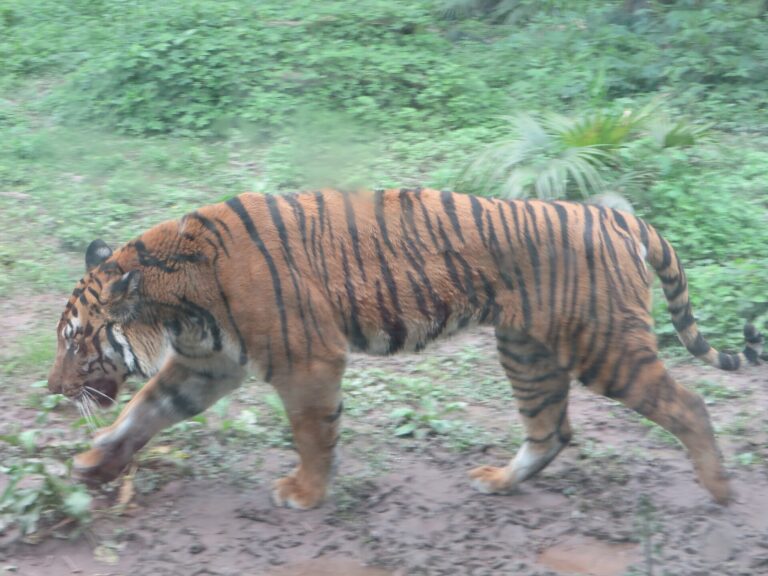
Photo: Leon Aschemann on Pexels.
Updated 13 September 2026: corrected the 2005 and 2015 census figures and updated the China count.
Updated 15 November 2026: corrected the source of the historical weights, the China counts and home range figures, added the IUCN estimate and the swine fever and conflict figures, and removed the store donation claim.




I lived in Vladivostok 6 years and never saw tiger, only tracks one time near Shkotovo, my friend’s father showed us. Is normal, most people there never see one. The hunters always said if no boar then no tiger, they were saying this long before the scientists I think.
Hang on, the Soviets banned tiger hunting in 1947? Before anyone else? Did not have that on my bingo card. Was it actually enforced though, or just on paper?
Yes, 1947, and it was the first full ban anywhere. Enforcement was patchy to be fair, and cubs were still being caught for zoos for a while afterwards. But it’s the main reason there were any left to recover.
Glad someone finally kept the historical weights apart from the modern ones. A lot of the old figures came from hunters and you have to wonder how many were weighed on a full stomach, or just estimated. The modern average for males being well under 200 kg is the number I’d trust. Doesn’t stop every YouTube video saying 300 kg plus.