
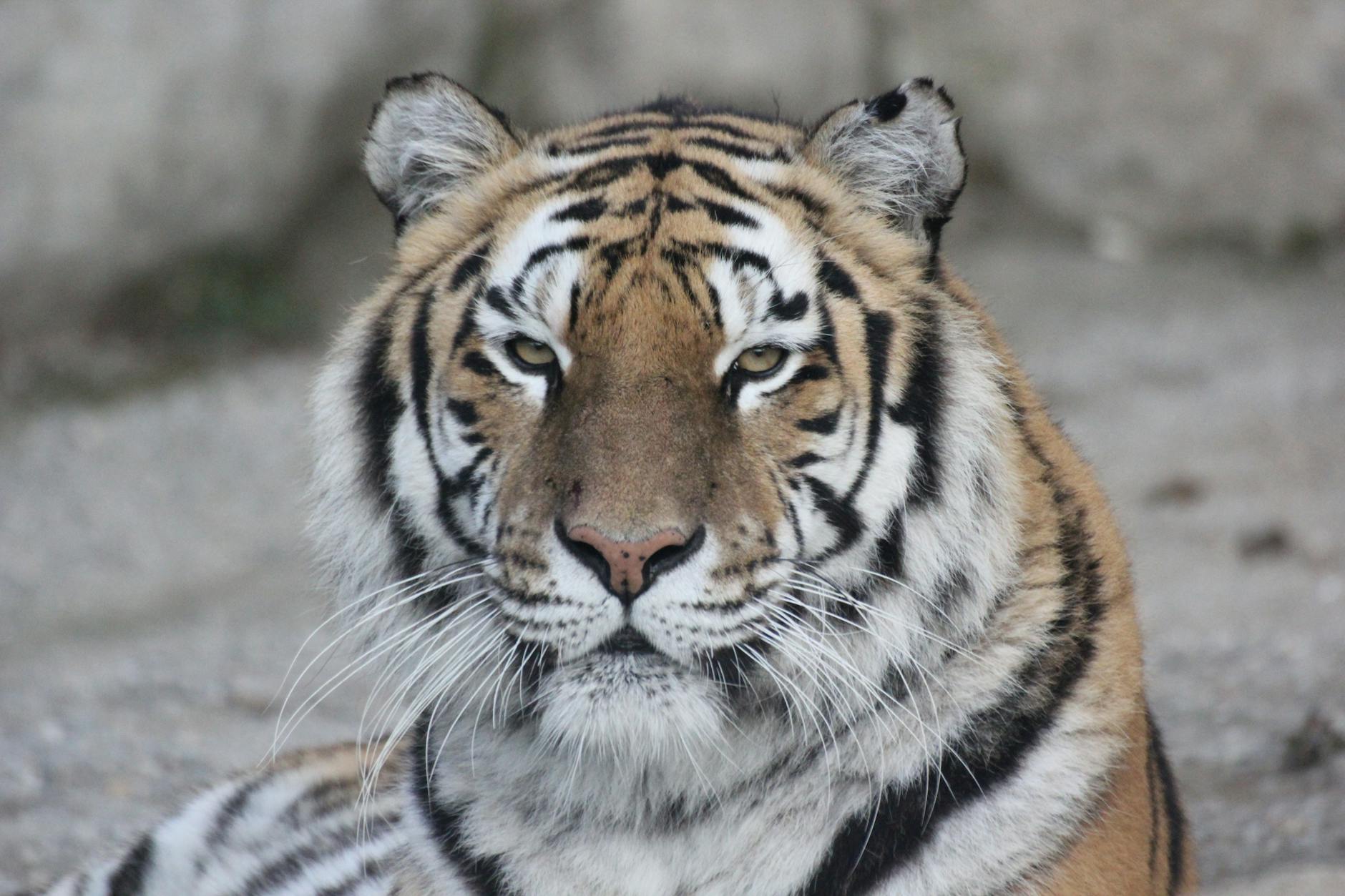
For most of the cultures that share its range, the tiger has never been only an animal. It is a guardian, a zodiac sign, a god’s mount, a compass direction. The animal is the same one camera traps record at night in Kanha or Sikhote-Alin. What differs is how each culture has read it.
This is a short tour of the folklore and mythology of the places where tigers live or lived: China, India, Korea, the Russian Far East and Southeast Asia. Where a tradition can be traced to a text or a study, we name it.
Key facts
- The tiger is the third sign of the Chinese zodiac and the white tiger stands for the west in the Four Symbols cosmology
- In Hindu tradition the tiger or lion is the vahana of the goddess Durga
- In Korea the tiger appears in the founding myth, in folk painting and beside the Mountain God
- Communities across Southeast Asia have treated tigers as ancestors or as transformed people
- In the Sundarbans, Hindus and Muslims alike pray to the forest goddess Bonbibi for protection from tigers
The table lists the main figures and the best source we could find for each.
| Region | Figure or motif | What the tiger does | Source |
|---|---|---|---|
| China | White Tiger (bai hu) | Stands for the west and for autumn among the Four Symbols | Chinese constellation lore |
| China | Tiger tally (hufu) | A bronze tiger split in two; both halves had to match before a military order was valid | Surviving tallies from the Warring States period onward |
| India | Durga’s mount | Carries the goddess into battle; a lion in some regions, a tiger in others | Temple and popular imagery |
| Sundarbans | Bonbibi and Dakshin Rai | Bonbibi protects forest workers; Dakshin Rai takes the form of a tiger | Worship by Hindus and Muslims today |
| Maharashtra | Waghoba | A deity of both tiger and leopard, with village shrines | Nair and colleagues, Frontiers in Conservation Science, 2021 |
| Korea | The tiger of the Dangun myth | Fails the test that the bear passes | Samguk Yusa, 13th century |
| Russian Far East | Amba | Kinsman and master of the taiga; killing one is forbidden | Udege and Nanai tradition |
| Sumatra | Spirit tigers | Punish people who break customary rules | McKay and colleagues, PLoS ONE, 2018 |
China: zodiac, four symbols, and the white tiger of the west
In China the tiger is the third animal in the twelve-year zodiac cycle, after the rat and the ox. People born in tiger years are conventionally described as brave, confident and sometimes hot-headed. Under the zodiac sits a much older scheme in which the white tiger (bai hu) is one of the Four Symbols of the Chinese constellations and stands for the west and for autumn. Each of the four has its own colour, direction, season and group of seven star mansions.
Tigers are guardian figures in Chinese folk art. Children’s hats and shoes embroidered with tiger faces are a long-standing custom meant to protect the wearer. Bronze tiger tallies (hufu), split in two so that a military order was valid only when both halves matched, survive from the Warring States period onward.
India: Durga’s mount and the king of the forest
The most familiar Indian tiger image is Durga riding into battle on a big cat. Whether that cat is a tiger or a lion varies by region and period, and plenty of images are ambiguous. The mount is her vahana, the animal that signals her power. Popular tradition calls it Dawon or Somnandi, names we could not trace to the main scriptural sources. In Bengal Durga’s mount is usually shown as a lion, and the tiger has religious figures of its own there: Dakshin Rai, who takes the form of a tiger, and the forest goddess Bonbibi. In the Sundarbans, Hindu and Muslim honey collectors and fishermen pray to Bonbibi before they enter the forest.
Tigers run through rural storytelling across the Subcontinent as cunning, generous, vindictive or wise, depending on the tale. In Maharashtra the Warli worship Waghoba, a big cat deity who stands for both the tiger and the leopard. A 2021 study in Frontiers in Conservation Science documented 150 Waghoba shrines across Mumbai’s suburbs and the Palghar and Thane districts. It found that the Warli believe the right rituals protect them from the cats they live beside.
The Indian Board for Wildlife chose the tiger as national animal in 1972, in place of the Asiatic lion, and Project Tiger began on 1 April 1973. Some accounts date the formal adoption to that April. A.K. Ramanujan’s Folktales from India is a good doorway into the storytelling tradition.
Korea: tigers as guardians and tricksters
The tiger is in Korea’s founding myth, first written down in the 13th century Samguk Yusa. A bear and a tiger asked to become human, and were given mugwort and garlic and told to stay out of the sunlight. The tiger gave up. The bear endured, became the woman Ungnyeo, and bore Dangun, the legendary founder of Gojoseon.
In Korean folk painting (minhwa) the tiger is everywhere, and it is rarely menacing. The “tiger and magpie” motif shows the tiger looking comical, even a little stupid, while the magpie scolds it. The Mountain God (Sanshin) is usually painted with a tiger beside him.
The 1988 Seoul Olympics chose Hodori the tiger as mascot, and the 2018 Pyeongchang Olympics chose Soohorang, a white tiger. The symbol has outlived the animal: the last confirmed wild tiger in the southern half of the peninsula was killed in the Gyeongju area in 1921 or 1922 (accounts differ), a history we cover in tigers in South Korea.
Russia: the Amur tiger as forest spirit
In the Russian Far East, the Udege, Nanai and other indigenous peoples of the Amur region treat the tiger with a respect that shades into religion. The Udege call it Amba and regard it as a kinsman and master of the taiga. The same word can carry the sense of a dangerous spirit. Hunters avoided naming the animal directly, killing a tiger was forbidden, and a hunter who attacked one without cause was said to be hunted down by Amba in turn.
See our piece on Russia and the Amur tiger recovery for what happened to the animal itself.
Southeast Asia: ancestors and tiger people
Across Indonesia and Malaysia, tigers are often treated as ancestors or as transformed people. The weretiger (harimau jadian) is a recurring figure in Malay and Indonesian folklore. A 2018 study in PLoS ONE interviewed 154 people in rural Sumatra, most of them Minangkabau, Kerincinese and Melayu. Minangkabau and Kerincinese villagers strongly believed in spirit tigers alongside ordinary ones, and many described customary laws about tigers. A person killed by a tiger was often thought to have broken a rule, such as committing adultery.
In the same study, most people said they would do nothing if a tiger killed a villager who was hunting in the forest. That tolerance matters to the Sumatran tiger, the last island tiger left, because legal protection alone does not always change how people act.
What the folklore tells us about the animal
Each of these traditions deserves to be read on its own terms. Set side by side, two things stand out.
First, the people who lived closest to tigers rarely cast them as plain monsters. The Bonbibi prayers, the Udege ban on killing and the Sumatran customary laws all treat the tiger as a power to stay on good terms with. They are ways of living beside a real risk.
Second, tigers in folklore are individuals with names and tempers, which suits a solitary animal. It also matches the field biology: every wild tiger can be told apart by its coat, as our piece on why tigers have stripes explains.
For how tigers show up in modern film, books and advertising, see tigers in popular culture. For the individual tigers behind modern Indian tiger stories, see famous wild tigers and their stories.
FAQs
What does the tiger symbolise in Chinese culture?
In the zodiac it represents bravery and confidence. The older layer is the white tiger of the west in the Four Symbols cosmology, tied to a direction and a season rather than a personality.
Does Durga ride a tiger or a lion?
Both, depending on the tradition, the region and the period. The mount is her vahana. Popular names for it include Dawon and Somnandi, which we could not trace to the main scriptural sources.
What role does the tiger play in Korean mythology?
It is one of the two animals in the founding myth, the comic figure scolded by the magpie in folk painting, and the companion of the Mountain God.
What is the Amur tiger called in indigenous traditions?
The Udege call it Amba and regard it as a kinsman and master of the taiga. The word can also mean a dangerous spirit. Hunters avoided naming the animal directly.
Are tigers worshipped anywhere today?
Yes. In the Sundarbans, Hindus and Muslims pray to Bonbibi, and to Dakshin Rai, who takes the form of a tiger, before entering the forest. In Maharashtra the Warli keep shrines to Waghoba, a deity of both tiger and leopard, and a 2021 study counted 150 of them.
What does the white tiger represent?
In Chinese tradition, the west and autumn among the Four Symbols. In biology, “white tiger” means a Bengal tiger with a recessive pigment mutation, covered in our piece on why white tigers exist. The two meanings are unrelated.
Sources
- Frontiers in Conservation Science: Sharing Spaces and Entanglements With Big Cats: The Warli and Their Waghoba in Maharashtra, India
- PLOS ONE: Tolerating tigers: Gaining local and spiritual perspectives on human-tiger interactions in Sumatra through rural community interviews
- NPR: Meet Bonbibi: The Indian Forest Goddess Worshipped Across Religions
- Environment & Society Portal: Bonbibi: A Religion of the Forest in the Sundarbans
- Down To Earth: International Tiger Day 2025: Like the Sundarbans’ Dakshin Rai and western India’s Waghoba, Amba lords over the Russian Far East’s taiga
- Russian Life: The Hunt
- China Daily: Bronze tally reflects highly centralized military leadership of Qin State
- Philadelphia Museum of Art: The Great Goddess as Ishwari, with Bhadragaura, c. 1700 to 1725
- Cleveland Museum of Art: Mirror with Deities, Chariot, and the White Tiger
- Britannica: Tangun
- The Korea Times: Tigers and magpies, Korean folk art’s odd couple, in spotlight at Leeum
- The Met: Mountain God with Tiger and Attendants
- Korea.net: Olympic mascots symbolize protection, harmony
- Press Information Bureau: International Tiger Day 2024: A Global Commitment to Tiger Conservation
- Telangana Today: 53 years of Project Tiger: Roar of resilience from near-extinction to global leader
Updated 13 September 2026: corrected Durga’s mount in Bengal and the tiger’s place in the zodiac.
Updated 15 November 2026: corrected the account of tiger worship today, the meaning of the Udege name Amba and the date of India’s national animal decision, and removed claims we could not source.
Updated 28 November 2026: added a sources list and noted that accounts differ on the year of the last wild tiger in the south of the peninsula.



In Korea the old stories start with ‘when tigers used to smoke’, like your once upon a time 🙂 I was surprised to see a Korean part here, usually English articles only write about China and India. One small thing, the tiger in our stories is often quite stupid and gets tricked, not only scary. My grandmother told me the one with the dried persimmon many many times.
I always get confused if Durga rides a lion or a tiger. So it’s both? ok
Interesting idea that you can tell where tigers used to live from where the stories are. Does it work in reverse though? Are there places with tiger stories where there were never any tigers? Thinking of how lions turn up all over English heraldry.
Good question Nathaniel, and yes, a bit. Tigers show up a lot in Japanese art for instance, and Japan never had wild ones. The image came over from China and Korea. So it’s not a perfect map. It works better for folk tales than for court art, if that makes sense.