

Most wild tigers live in or around protected areas that cover a small part of the range the species once had. Below are the best known of them, country by country, with the latest published tiger count for each.
India has by far the largest network. Nepal, Bhutan, Bangladesh, Russia, China and Thailand have smaller ones. Not every tiger lives inside a reserve. Of the 3,682 tigers in India’s 2022 estimation, the government puts 2,338 inside reserves and 1,344 outside.
Key facts
- India: 58 tiger reserves in 18 states, covering about 84,500 sq km (National Tiger Conservation Authority list, November 2026).
- Project Tiger launched in 1973 with nine reserves.
- Russia: Amur tigers range across Primorsky and Khabarovsk Krais, inside and outside reserves.
- Nepal: five protected areas with breeding tigers, holding 429 between them on the 2026 census.
- Indian reserves are zoned into a core, meant to be free of settlement, and a regulated buffer.
Tiger counts, reserve by reserve
These are the most recent figures that could be verified for individual reserves. Nearly all come from camera-trap surveys, a method explained in our piece on how camera traps count tigers.
| Reserve | Country | Tigers | Survey |
|---|---|---|---|
| Corbett | India | 260 | All India Tiger Estimation 2022 |
| Bandipur | India | 150 | All India Tiger Estimation 2022 |
| Kaziranga | India | 148 | Reserve survey 2024 (104 in the 2022 estimation) |
| Nagarhole | India | 141 | All India Tiger Estimation 2022 |
| Bandhavgarh | India | 135 | All India Tiger Estimation 2022 |
| Dudhwa | India | 135 | All India Tiger Estimation 2022 |
| Kanha | India | 105 | All India Tiger Estimation 2022 |
| Sundarbans (Indian side) | India | 100 | All India Tiger Estimation 2022 |
| Tadoba-Andhari | India | 97 | All India Tiger Estimation 2022 |
| Ranthambore | India | 57 | All India Tiger Estimation 2022 |
| Chitwan | Nepal | 145 | National census 2026 |
| Bardiya | Nepal | 112 | National census 2026 |
| Parsa | Nepal | 71 | National census 2026 |
| Banke | Nepal | 51 | National census 2026 |
| Shuklaphanta | Nepal | 50 | National census 2026 |
| Royal Manas | Bhutan | 29 | National Tiger Survey 2021 to 2022 (individuals identified) |
| Sundarbans (Bangladesh side) | Bangladesh | 125 adults | Camera trap survey 2023 to 2024 |
| Huai Kha Khaeng | Thailand | 100 | Department of National Parks, July 2026 |
| Northeast China Tiger and Leopard National Park | China | 72 | Announced July 2026 |
The Indian figures are tigers estimated inside each reserve boundary. More animals use the edges, and Corbett’s 260 becomes 319 when tigers using the reserve are included. Counts from different countries come from different years and methods, so small gaps between them mean little. Russian and Sumatran reserves are missing because no current reserve-level count could be found to cite.
India: the world’s tiger heartland
India holds about two thirds of the world’s wild tigers: 3,682 on the 2022 All India Tiger Estimation against a global 5,574. The network of 58 tiger reserves grew out of Project Tiger, launched in 1973 with nine. The National Tiger Conservation Authority runs the system and repeats the national estimation every four years. Guinness World Records lists the 2018 round, with camera traps at 26,838 locations, as the largest camera-trap wildlife survey. The survey history, the state figures and the story of Project Tiger are on our page about tigers in India.
The best-known reserves:
- Corbett (Uttarakhand): India’s first national park, established as Hailey National Park in 1936 and renamed after Jim Corbett in the 1950s. It has the most tigers of any reserve, 260 in 2022, at 14.65 per 100 sq km.
- Ranthambore (Rajasthan): dry deciduous forest dotted with ruins, and the home of the tigress Machli. It had 57 tigers in 2022, and Rajasthan’s state count of July 2026 put it at 70 or more.
- Bandhavgarh (Madhya Pradesh): hilly sal forest in the Vindhyas, with 135 tigers in 2022.
- Kanha (Madhya Pradesh): sal forest and meadow, where George Schaller did the 1960s fieldwork behind The Deer and the Tiger (1967). 105 tigers in 2022.
- Tadoba (Maharashtra): dry deciduous teak forest, with 97 tigers in 2022.
- Nagarhole and Bandipur (Karnataka): neighbouring reserves in the Western Ghats, with 141 and 150 tigers in 2022. Nagarhole is where Ullas Karanth and Mel Sunquist studied which prey tigers, leopards and dholes each select.
- Sundarbans (West Bengal): mangrove shared with Bangladesh, where tigers swim between tidal islands. 100 tigers on the Indian side in 2022.
- Sariska (Rajasthan): the first major Indian reserve to lose every tiger, confirmed empty in March 2005 after poaching and restocked from Ranthambore from June 2008. Rajasthan’s state count of July 2026 gave it 56.
- Panna (Madhya Pradesh): the same story a few years later. It was empty by 2009, translocations began that March, and the 2022 estimation found 55 tigers.
- Pench (Madhya Pradesh): the Seoni hills usually named as the setting for Kipling’s Jungle Book, though Kipling never went there. 77 tigers on the Madhya Pradesh side in 2022.
- Dudhwa (Uttar Pradesh): Terai forest and grassland on the Nepal border, with 135 tigers in 2022. In the 1970s Billy Arjan Singh released a zoo-born tigress here, the story told in Tara of Dudhwa.
- Kaziranga (Assam): floodplain grassland on the Brahmaputra. The reserve’s own 2024 survey counted 148 tigers, at more than 18 per 100 sq km.
The Indian system runs on a core-and-buffer model. The core is meant to be free of settlement and resource use. The buffer allows regulated tourism, grazing and traditional use in many places. Moving forest-dwelling communities out of cores has been the most contested part of it.
Two practical points for visitors. Most Indian reserves close their core zones for the monsoon, roughly July to September. And a Supreme Court ruling of 17 November 2025 banned night tourism in core areas and barred mobile phones in core tourism zones.
Russia: the Far East and the Amur tiger
The Russian Far East holds almost all the world’s wild Amur tigers, across Primorsky and Khabarovsk Krais. The count is contested: Russia announced about 750 including cubs on its 2022 census, the IUCN’s 2022 assessment estimates 386 adults and subadults (range 265 to 486), and the last survey with a published method, in 2015, returned 523 to 540 including about 100 cubs. Five of the best-known protected areas:
- Sikhote-Alin Biosphere Reserve: established 1935, the site of decades of tiger fieldwork.
- Land of the Leopard National Park: created 2012, shared range with the Amur leopard and the key link to the Chinese population.
- Lazovsky Reserve: coastal mixed forest, important breeding habitat.
- Anyuysky National Park: the large northern reserve in Khabarovsk Krai.
- Bikin National Park: gazetted in 2015 in Primorsky Krai on the traditional lands of the Udege, and holding roughly a tenth of all wild Amur tigers.
Amur tigers need far more room than Bengal tigers. Males tracked by the Siberian Tiger Project used home ranges averaging 1,385 sq km, and females 390 sq km (Goodrich and colleagues, 2010). Read more in our piece on the Amur tiger recovery.
Nepal: five parks, 429 tigers
Nepal went from 121 tigers in 2009 to 355 in 2022, and it is the one country WWF credits by name with beating the 2010 St Petersburg pledge to double wild tiger numbers by 2022. India’s own estimates also more than doubled, from 1,706 in 2010 to 3,682 in 2022. Nepal’s 2026 census counted 429, in five parks:
- Chitwan National Park: lowland Terai forest, a UNESCO World Heritage Site, 145 tigers.
- Bardiya National Park: drier western Terai, 112 tigers, down from 125 in 2022 and the only park to decline.
- Parsa National Park: eastern extension of Chitwan, 71 tigers.
- Shuklaphanta National Park: small grassland-forest mosaic in the far west, 50 tigers.
- Banke National Park: established 2010 as a corridor connector to Bardiya, 51 tigers.
The army has guarded Nepal’s parks since 1975, and the Khata corridor still links Bardiya to Katarniaghat Wildlife Sanctuary in India.
Bhutan and Bangladesh
- Royal Manas (Bhutan): joined to India’s Manas Tiger Reserve across the border. Bhutan’s national surveys identified 15 tigers here in 2014 to 2015 and 29 in 2021 to 2022.
- Sundarbans (Bangladesh): 6,017 sq km of mangrove reserved forest, with 125 adult tigers on the 2023 to 2024 survey. All of it lies at sea level, which makes it the tiger forest most exposed to rising seas.
Southeast Asia: the hardest landscape
This is where tiger conservation is under the most pressure. Tigers are functionally extinct in Cambodia, Laos and Vietnam. Malaysia’s first national tiger survey, run from 2016 to 2020, put the Malayan tiger below 150 animals, down from earlier estimates of 250 to 340. Sumatran tigers sit in a working band of 400 to 600 with no agreed island-wide census.
- Western Forest Complex (Thailand): 17 connected protected areas anchored on Huai Kha Khaeng, and the main stronghold of the Indochinese tiger. Thailand’s Department of National Parks counted 182 tigers in the complex in July 2026, 100 of them in Huai Kha Khaeng, out of at least 210 nationally.
- Royal Belum and Taman Negara (Malaysia): two of the main Malayan tiger landscapes. Snaring is the primary threat.
- Kerinci Seblat, Gunung Leuser and Bukit Barisan Selatan (Sumatra): three of the main Sumatran tiger landscapes, all under pressure from oil palm and other plantations.
What makes a tiger reserve work
Reserves that hold their tigers tend to have four things: a large core, enough prey to feed the tigers in it, patrol staff who are equipped and in contact with each other, and a working relationship with the people in the buffer, backed by compensation that gets paid.
A reserve can look healthy on a map and still fail. Sariska and Panna both had cores and official counts that showed tigers. They lost their protection, and then their tigers.
If you want to read about the individual animals these reserves produced, see famous wild tigers and their stories.
Frequently asked questions
How many tiger reserves are there in India?
58, covering about 84,500 sq km across 18 states, up from the nine that Project Tiger started with in 1973. Madhav in Madhya Pradesh, announced in March 2025, is the most recent.
Which is the best tiger reserve to see a tiger?
Tadoba in Maharashtra, Bandhavgarh and Pench in Madhya Pradesh, and Ranthambore in Rajasthan are the usual answers. Season and luck still decide it, and most Indian reserves close their core zones for the monsoon, roughly July to September.
Where do Amur tigers live?
Almost entirely in Primorsky and Khabarovsk Krais in the Russian Far East. A smaller population lives across the border in China’s Northeast China Tiger and Leopard National Park, which reported 72 tigers in July 2026, and animals move between the two.
Why does Nepal punch above its weight on tiger conservation?
Army protection of the parks since 1975, a strong anti-poaching record, and forest corridors that still link its parks to India’s. Its count rose from 121 in 2009 to 355 by the 2022 target date and 429 in 2026.
Which tiger subspecies are most at risk?
Malayan, Sumatran and South China tigers are all Critically Endangered, and the South China tiger is already gone from the wild. Indochinese tigers survive only in Thailand and Myanmar.
What is a core tiger reserve area?
The inviolate part of a reserve, with no permanent human occupation or commercial activity. The surrounding buffer allows regulated tourism, grazing and traditional use rights.
How are tiger numbers in reserves counted?
Mostly by camera trap. Individual tigers are identified from their stripe patterns, then scaled to a landscape estimate with statistical models. Guinness World Records lists India’s 2018 estimation, with cameras at 26,838 locations, as the largest camera-trap wildlife survey.
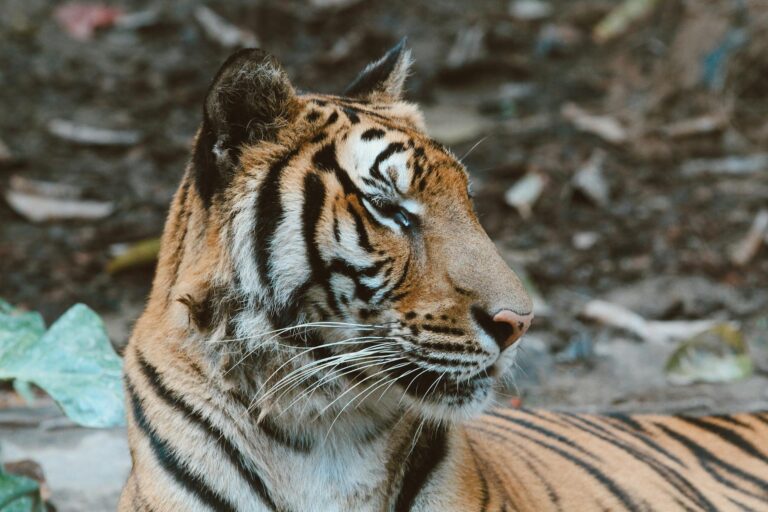
Photo by Jayanth Muppaneni on Pexels.
Updated 13 September 2026: updated Nepal’s park figures to the 2026 census and noted that India also met the doubling target.
Updated 15 November 2026: added a reserve by reserve table, corrected the Kanha entry and the reserve network area, and updated the Thailand, Sariska and China figures.
Updated 18 November 2026: relabelled the IUCN figure for Russia (adults and subadults) and cited the official 2022 announcement.



For anyone asking where to actually see one, Tadoba. We saw 3 in two days this May. It was 44 degrees but worth it. Ranthambore is prettier but we got nothing there in 4 safaris.
Went to Corbett in 2017 and Chitwan in 2019. Chitwan felt much better run to me, more guards about, though I’m no expert. The jeep queues at Corbett were rediculous.