

Most wild tigers live, breed, and die without ever being named. A few become so well known that guides, photographers and researchers describe the whole species through them. This is a short profile of six wild tigers whose lives we know in detail, and what each one tells us about the species.
Key facts
- Wild tigers are individually identifiable by stripe pattern
- Long-term monitoring programmes at major reserves track named individuals across decades
- Famous tigers usually become famous because they are visible to tourists or to long-term research
- Their personal stories almost always reflect a wider conservation pattern
Machli, the queen of Ranthambore
Machli (T-16) is often called the most photographed wild tiger in the world. She was born around 1997 in Ranthambore National Park in Rajasthan and died on 18 August 2016, aged about 19, an extraordinary age for a wild tigress. She held the ground around the Padam Talao lake and raised litter after litter. In 2003 she killed a large mugger crocodile in a fight that was filmed, cost her two canine teeth, and gave her the nickname the crocodile killer. Accounts put the crocodile at 12 to 14 feet.
Her contribution to Ranthambore goes well beyond her own litters. A large share of the reserve’s current tigers trace back to her. Her fourth litter was three daughters, Sundari (T-17), Athara (T-18) and Krishna (T-19), and two of her daughters were moved to Sariska to help rebuild the tiger population there. India Post issued a commemorative cover in her honour in 2013, and forest staff cremated her with Hindu rites.
Arrowhead, the heir
Arrowhead (T-84) was a daughter of Krishna (T-19), which makes her Machli’s granddaughter, and she held the lake territory around Ranthambore Fort through the late 2010s. She was named for the arrowhead-shaped marking on her coat. She took over her mother’s ground and raised cubs among the ruins that make Ranthambore so photogenic.
Her last years showed how hard old age is for a wild tigress. She developed a tumour, reported variously as bone cancer and a brain tumour, lost condition, and lost the lake territory to her own daughter Riddhi (T-124). On 16 June 2025 she pulled down a crocodile in Padam Talao. She died three days later, on 19 June 2025, hours after another daughter, Kankati, was moved to Mukundra Hills Tiger Reserve. Reports of her age ranged from 11 to 14.
Maya, the photographer’s tigress (Tadoba)
Maya (T-12) was born in December 2010 at Pandharpauni in Tadoba Andhari Tiger Reserve, Maharashtra, to the tigress Leela. She held the ground around Pandharpauni for more than a decade and has been called one of the most documented big cats in the world. She was last seen in August 2023. On 18 November that year forest staff found a tiger’s scattered remains in Tadoba range and sent samples for DNA testing. The department’s first view was that the animal had died of natural causes. We could not find a published DNA result, so the identification is still unconfirmed.
One correction, because the mix up circulates widely: the four cubs known as the Telia sisters were not Maya’s. Sonam, Lara, Geeta and Mona were born to the tigress Madhuri and sired by the Waghdoh male. A Discovery Channel film, shown in India in 2015 as Tiger Sisters of Telia, made them famous. Maya and the Telia sisters lived in the same landscape, which is where the confusion comes from.
B2, Bandhavgarh’s flagship male
B2 was a large male in Bandhavgarh National Park in Madhya Pradesh, dominant through the early 2000s. He was the son of Sita and Charger, the pair who defined Bandhavgarh in the 1990s, and he was photographed constantly by Indian and international wildlife photographers. His tiger territory covered much of the Tala range.
He was found injured on 18 November 2011 and died on 21 November. The post-mortem gave old age and injuries as the causes, and the injuries are usually put down to a fight with the Bamera male, his own son, who had been pushing him toward the edges of the park. His life followed the usual course for an adult male tiger: dominance, breeding success, displacement by a younger animal, fatal injury. Few wild males die of old age alone.
Boris, the Amur tiger
Boris is an Amur tiger known for one long walk. He was one of a group of orphaned cubs raised with minimal human contact at the Centre for the Rehabilitation and Reintroduction of Tigers and other Rare Animals in Primorsky Krai and taught to hunt live prey. He was released with a satellite collar in May 2014, at around 18 months old, into the Pri-Amur region, where tigers had been absent for decades. A female called Svetlaya, raised at the same centre, was released separately more than 150 kilometres away. Boris walked roughly 200 kilometres and found her. She had cubs six months later.
The press often calls him “Putin’s tiger” because Vladimir Putin took part in the release. The biology matters more. A study published in the Journal of Wildlife Management in 2024 followed the programme’s orphans and found that they did as well as wild tigers: 13 cubs were raised and released, and only one had to be recaptured. For more context see our piece on the Amur tiger recovery.
Genghis, the swimming tiger
Genghis was a male tiger in Ranthambore in the early 1980s, watched and written about by Valmik Thapar and the park’s field director Fateh Singh Rathore. Through 1983 and 1984 he worked the lakes, charging into the water to pull down sambar that had waded in to feed, and taking kills from the crocodiles. Thapar filmed him doing it. Killing large deer in water was seen at the time as an unusual form of tiger predation.
He later disappeared and is presumed to have died. The technique outlasted him: Thapar recorded that the tigress Noon learned to hunt in the water the same way. Tigers in the Sundarbans and the Russian Far East are strong swimmers too, as our piece on whether tigers can swim sets out.
What these stories add up to
Each of these tigers became famous because somebody watched them for long enough. There are tigers in Tadoba and Bandhavgarh right now, living much the same lives, whose names nobody will ever know. A wild tiger watched continuously turns out to follow the family, lifespan and territory patterns we describe elsewhere on this site, only with a name attached.
For the underlying biology, see our pieces on tiger cubs and family life and how long tigers live. For the history of Indian tiger reintroduction (which Tara of Dudhwa opens and Boris continues in a different country), see our piece on Tara. And for the wider reserve network these tigers lived in, see our tour of the world’s tiger reserves.
Wider background reading: Panthera’s tiger programme covers research and field operations in detail, and the IUCN Red List entry is the canonical population status document.
FAQs
Who is the most famous tiger ever?
Machli (T-16) of Ranthambore is the usual answer: born around 1997, dead in August 2016 aged about 19, with several successful litters and years as the best known tiger in Indian wildlife tourism.
How do researchers identify individual tigers?
By stripe pattern. Every tiger’s pattern is unique and runs all the way through to the skin. Survey teams match patterns in camera-trap photographs to follow individuals across years and reserves.
What happened to Machli?
She died on 18 August 2016, aged about 19, of natural causes linked to her age. A large share of Ranthambore’s tigers descend from her, and forest staff cremated her with Hindu rites.
Who is Boris the tiger?
An Amur tiger orphan rehabilitated and released in the Russian Far East in 2014, then tracked by satellite as he walked roughly 200 kilometres to a tigress released from the same centre. They had cubs. Vladimir Putin took part in his release.
Do wild tigers really get names?
Yes. Indian reserves use formal individual codes (T-16, B2, T-84) and informal names. Both serve the same purpose: tracking known individuals across years for research and monitoring.
Are male tigers ever as famous as females?
Yes. B2 of Bandhavgarh and his father Charger are the usual examples from India, and Boris from Russia.
Why do famous tigers matter beyond their reserves?
They give people a single animal to follow. Machli had a commemorative postal cover and the Telia sisters a Discovery Channel film, which is attention no population estimate gets.
Updated 13 September 2026: corrected where Boris was released and the name of Tara’s reserve.
Updated 15 November 2026: corrected Arrowhead’s death to 19 June 2025, the name of Maya’s mother, the date of B2’s death and details of Machli’s crocodile fight and cremation.
Updated 18 November 2026: removed an unsourced date for Genghis’s disappearance.


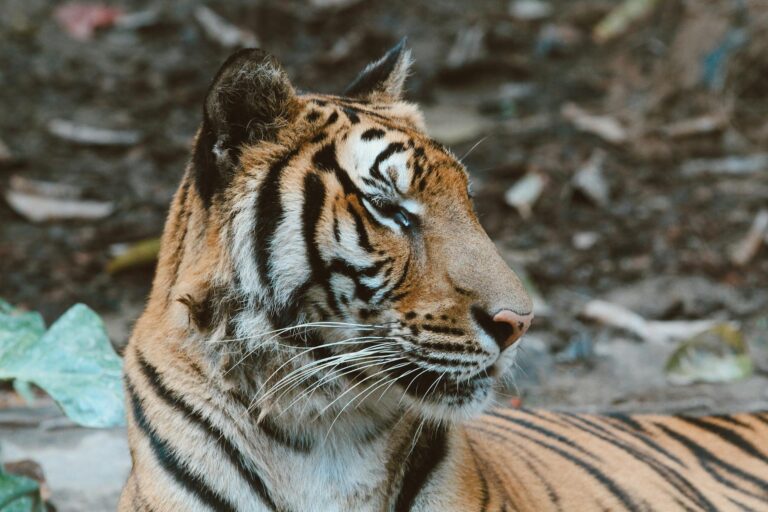
Machli!! She was my first ever tiger, 2009. Our gypsy broke down on the track and the driver was panicking and then she just walked out of the grass like she owned the place. Which she did. I cried when she died. Thanks for including her.
I followed Arrowhead for years through the guides’ Instagram accounts, and Machli before her in the documentaries. If I am honest I care more about these named tigers than about any statistic. Maybe that is wrong but it’s how people work.
I don’t think it’s wrong Roland, I’m the same. It only goes wrong when all the money follows three or four famous cats.
Never heard of Genghis before. Off to read the swimming one now.