
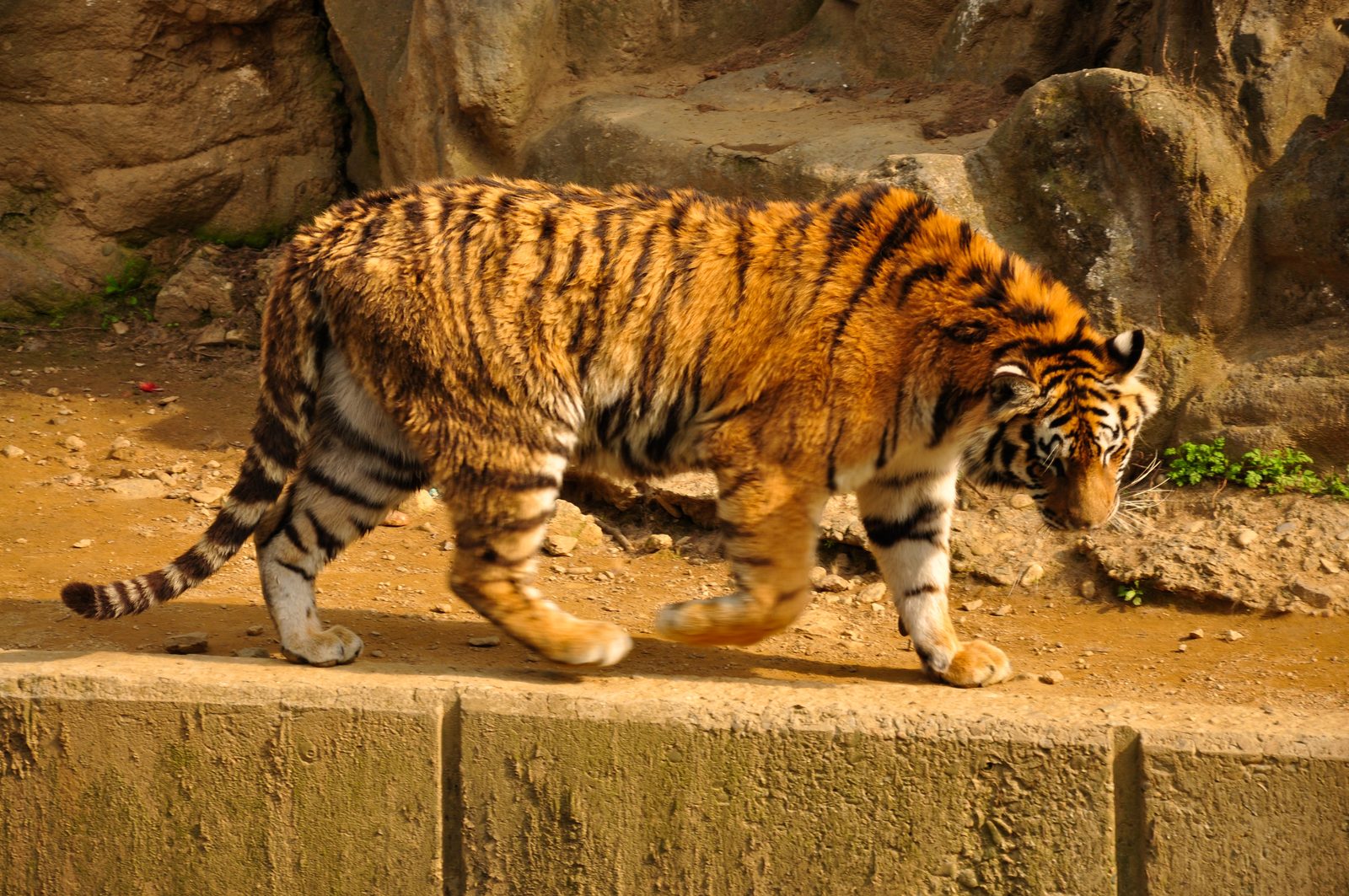
South Korea has no wild tigers. It was once home to a substantial Amur tiger population that helped shape Korean folklore and national identity (the tiger is the unofficial national animal and was the mascot of the 1988 Seoul Olympics). Japanese colonial era extermination campaigns drove the species out of the southern half of the peninsula by the mid 1920s. Today the only tigers in South Korea are in zoos and in a forest enclosure at a national arboretum.
| Status | Former range state, no current wild tigers |
|---|---|
| Subspecies | Historically Amur tiger (Panthera tigris altaica); gone from the wild here since the 1920s. |
| Current wild population | None since the 1920s. The tiger usually named as the last was killed on Daedeoksan near Gyeongju, dated 1921 or 1922 depending on the source; a 1924 capture at Hoengseong in Gangwon is also on record. A small captive population lives in zoos. |
Current status
South Korea has had no wild tigers since the 1920s. Captive tigers live at Everland Resort, at Seoul Zoo in Seoul Grand Park, and at the Baekdudaegan National Arboretum in Bonghwa, run by the Korea Arboreta and Gardens Institute. The arboretum’s tiger forest is a 3.8 hectare enclosure that held six Amur tigers in June 2026, according to the Seoul Shinmun. No reintroduction is under way.
A short history of Korean tigers
The Korean tiger (a regional name for Amur tigers on the peninsula) was central to Korean culture for over a thousand years, appearing on royal tombs, in folk paintings and in shamanistic traditions. The colonial Harmful Animal Eradication Project, haesu guje, put organised hunting parties into the mountains with modern rifles, poison and traps. Government-General statistics record 97 tigers and 624 leopards killed between 1919 and 1942. A separate series for 1915 to 1924 gives 89 tigers and 521 leopards; the two overlap, so they cannot be added together. The best known single expedition was the Jeonghogun hunt organised in 1917 by the businessman Yamamoto Tadasaburo. His party numbered about 150 with the Korean hunters and porters it hired, and afterwards he served tiger meat to more than 200 guests at the Imperial Hotel in Tokyo.
Accounts of the last wild tiger in the south disagree. Most name an animal killed on Daedeoksan near Gyeongju, dated 1921 in some sources and 1922 in others. A July 2026 government notice reported by the Segye Ilbo gives a 1924 capture at Hoengseong, in Gangwon, as the last record in South Korea.
Conservation context
South Korea has no wild tiger reintroduction programme. Amur tigers are kept at the Baekdudaegan National Arboretum, but no agency has published a plan to release any. Reintroduction would require the Baekdudaegan, the mountain spine of the peninsula, to be reconnected to Chinese and Russian tiger habitat, and North Korea lies in between.
Historical tiger habitat
The Baekdudaegan range runs the length of the peninsula, from Mount Paektu on the Chinese border to Jirisan in the south, and was the main historical corridor. The last tigers recorded in the south were at Daedeoksan near Gyeongju, in the south-east, and at Hoengseong in Gangwon, in the north-east.
What this means for tiger conservation
South Korea lost its tigers to a deliberate state programme, not to habitat loss, and that shapes what recovery would mean here. The forest came back: the country reforested hard after the Korean War and now carries substantial mountain cover along the Baekdudaegan. What it does not have is a land connection to any source population. The DMZ and North Korea sit between the peninsula’s southern forests and the nearest wild tigers in Jilin and Primorsky Krai.
Public affection is not the obstacle. The animal runs through Korean folk painting, and Korea supplies two of the best known tigers in popular culture: the Olympic mascots Hodori (Seoul 1988) and Soohorang (Pyeongchang 2018). The open questions are practical: where founders would come from, whether deer and boar numbers could carry a population, and whether the corridor problem can be solved at all without cooperation from Pyongyang. The nearest working example is Kazakhstan’s Ile-Balkhash project, which took delivery of two Amur tigers from the Netherlands in September 2024 and released its first wild-caught tiger on 31 July 2026.
Related reading
- Amur tiger profile
- Tigers in folklore
- External authority: Korea National Park Service
Frequently asked questions
When did tigers go extinct in South Korea?
In the 1920s. The animal usually named as the last was killed on Daedeoksan near Gyeongju, dated 1921 in some sources and 1922 in others. A 1924 capture at Hoengseong in Gangwon is also recorded as the last.
Are there tigers in South Korean zoos?
Yes, at Everland Resort, Seoul Zoo, and the Baekdudaegan National Arboretum, which held six Amur tigers in June 2026.
Is the tiger the national symbol of South Korea?
It is the country’s best known national symbol and its unofficial national animal, and it supplied both Hodori at the 1988 Seoul Olympics and Soohorang at the 2018 Pyeongchang Winter Olympics. The formal national emblem is a stylised Rose of Sharon rather than a tiger.
Could tigers be reintroduced to South Korea?
Nothing is planned. The Baekdudaegan corridor would need to be reconnected to mainland tiger habitat, and the only land route runs through North Korea.
How many tigers were killed during Japanese colonial rule?
Government-General statistics record 97 tigers, alongside 624 leopards, killed between 1919 and 1942. A separate series for 1915 to 1924 gives 89 tigers. The two overlap, so they cannot be added together.
More tiger countries
North Korea, Russia and China cover the same collapse from the other side of the frontier. Japan never had wild tigers, but its colonial government ran the Korean eradication campaign.
- Tigers in North Korea (wild tigers lost)
- Tigers in Russia (wild tigers today)
- Tigers in China (wild tigers today)
- Tigers in Japan (captive only)
All 25, grouped by whether tigers still live there: tigers by country.
Hero image: photo by Angelina Rodionow on Pexels.
Updated 13 September 2026: corrected who runs the Baekdudaegan tiger enclosure and added Kazakhstan’s 2026 release.
Updated 15 November 2026: corrected the date of the last wild tiger (sources give 1921, 1922 and 1924), the colonial kill statistics, the size of the 1917 hunting party and the arboretum details.