

Tara is one of the most argued-over tigers in Indian conservation. She came from a zoo in England, was hand-reared by a writer on the edge of a national park, went wild, and was then blamed for killing people. Nearly fifty years on there is no agreement on whether she was the man-eater, whether she was a pure Bengal tiger, or when she died.
One point is not in dispute. Tara lived at Dudhwa, in Uttar Pradesh. Earlier versions of this page placed her in Ranthambore, which is in Rajasthan, several hundred kilometres away. That was wrong.
Key facts
- Born at Twycross Zoo in England, brought to India in 1976 at three months old
- Hand-reared by Billy Arjan Singh at Tiger Haven, beside Dudhwa National Park, Uttar Pradesh
- Imported with the support of Prime Minister Indira Gandhi
- Made her first kill at 17 months and left for the forest at about two years old. Billy Arjan Singh reported that she bred there; accounts differ on whether that means four cubs or four litters
- A tigress said to be Tara was shot in November 1981, by most accounts, after a run of human deaths of which 24 were attributed to her. The identification is still disputed
- Later genetic work raised, but did not settle, the question of Siberian ancestry in the Dudhwa population
From Twycross Zoo to Tiger Haven
Billy Arjan Singh was a writer and naturalist who farmed at Tiger Haven, on the edge of Dudhwa National Park. He had already raised leopards for release: a male, Prince, released in 1973, and then two females, Harriet and Juliette. With a tiger he wanted to test the same idea on a harder case, whether a captive-born cat that had never known a wild mother could learn to live like one.
Tara arrived from Twycross Zoo in 1976, three months old. The zoo had called her Jane. Indira Gandhi, then prime minister, backed the import, though Singh later admitted he had not waited for the formal clearances. The cub grew up loose at Tiger Haven, and Singh walked her through the forest every day. He could not show her how to hunt as a tigress would.
At first it worked. Tara made her first kill, a sambar fawn, at 17 months, and at about two years old she left for the forest. Singh reported that she went on to breed. How often is unclear. One account gives four cubs, and his biographer Duff Hart-Davis wrote of four litters. Either way the evidence is Singh’s own, since he was the one person who claimed to be able to recognise her.
The killings
On 2 March 1978 a Forest Corporation employee was killed near Dudhwa. More people died that month and in April, and the attacks went on for years. Officials blamed more than one animal, and tigers were shot as man-eaters in August 1978 and May 1979. The figure of 24 deaths is the number attributed to Tara herself. Totals for the whole outbreak run much higher and differ from source to source.
The case against Tara rested on behaviour, with no physical evidence. A hand-reared cat associates people with food and has less reason to keep away from villages, officials argued, and the argument has force.
On 9 November 1981, the date most accounts give, the park director, R.L. Singh, shot a tigress and said it was Tara. (Hart-Davis’s biography of Billy Arjan Singh implies November 1980.) He had the animal mounted and displayed it at his house. Two later accounts say a committee of Indian tiger specialists examined the mount and concluded it was not Tara, and one adds that the same committee dismissed the photographs Billy Arjan Singh offered as proof. The committee’s own report could not be traced for this article. Billy Arjan Singh maintained for the rest of his life that the animal shot was not his. He believed Tara died in 1992, and sources disagree on whether he ever found her remains.
The identity of the tigress shot that day was never established. Officials maintained it was Tara, and Singh’s supporters say it was not. Neither side has evidence that would settle it.
The hybrid question
A second argument was about Tara’s ancestry, and it began before she reached India. Critics pointed out that zoo tigers of the time were rarely pure Bengal, and the certificate Singh held for her was a veterinary one, not a pedigree.
The genetic evidence came in the 1990s, and neither study tested Tara herself. Billy Arjan Singh sent hair from wild Dudhwa tigers, suspected of being hybrids descended from her, to the Centre for Cellular and Molecular Biology in Hyderabad. A microsatellite study published in 1997 analysed two of those hair samples alongside 71 tigers from Indian zoos and found that both carried, at two loci, alleles from Bengal and Siberian lineages. The authors called the two animals probable hybrids.
A second paper from the same laboratory, in 1998, sequenced a mitochondrial gene from Dudhwa hair samples and found the Indian type. Mitochondria pass down the female line only, so the result shows that the sampled animals had Indian tigers as their maternal ancestors. It does not show what Tara was. As the authors noted, it fits a Tara with an Indian mother and a Siberian father, and it also fits descendants of Tara’s sons by wild Indian tigresses, whatever her own maternal line.
The zoo records point somewhere else again. Douglas Richardson, then director of Rome Zoo, traced the three breeding tigers at Twycross at the time of Tara’s birth in a 1999 note quoted on the Lairweb tiger site: a male bred at Howletts and two females from an Edinburgh pair that had been listed as Bengal but were, he concluded, probably Indochinese. He called the suggestion of Siberian genes in the Indian population ludicrous. So the laboratory found a Siberian signal in two Dudhwa tigers and the zoo research found no Siberian ancestor for Tara. No published source traced for this article reconciles the two.
The question mattered because Indian tiger policy treated the Bengal tiger as a subspecies to be kept pure, and the idea of foreign ancestry entering a wild Indian population through an imported zoo animal was an uncomfortable one. The taxonomy has since moved. The IUCN’s Cat Specialist Group now recognises two tiger subspecies for management purposes, mainland and Sunda, while much of the field literature still works with the traditional scheme of nine subspecies, six of them still living.
What Tara’s case changed
India did not repeat the experiment in that form. The few later releases of hand-reared tigers were closely managed. Two orphaned cubs from Kanha, raised in an enclosure, were released at Panna in 2011, and an orphan from Bandhavgarh was released in Satpura in 2014. The usual tool became translocation, which means moving wild-caught tigers from a healthy population into one of India’s tiger reserves that has lost its own, as at Sariska from 2008 and Panna from 2009. Those animals already know how to hunt and are already wary of people, the two things Tara’s critics doubted about her.
Tara is one of several Indian tigers known by name. Our piece on famous wild tigers and their stories covers Machli of Ranthambore and others.
Project Tiger began three years before Tara arrived, and its history is on our page about tigers in India.
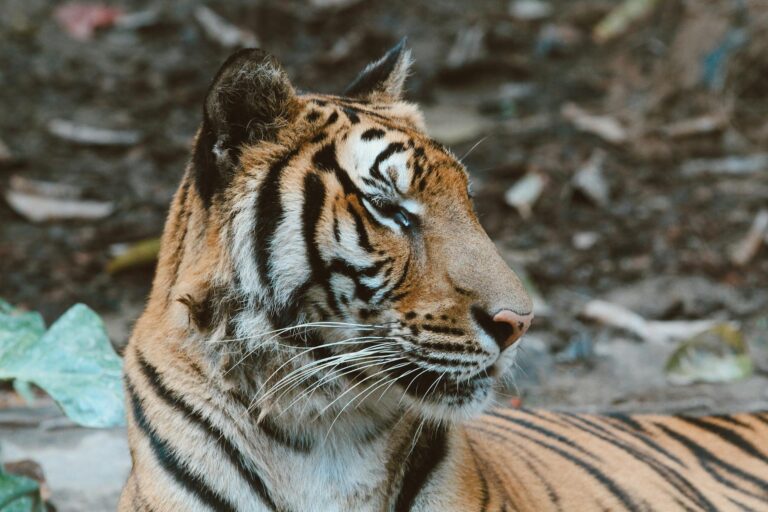
A note on the image: no photograph of Tara is available under a licence we can use. The tigress pictured here is a Bengal tigress in an Indian forest, included to illustrate the kind of animal Tara became, not to depict her.
Frequently asked questions
Who was Tara the tigress?
A tigress born at Twycross Zoo in England and brought to India in 1976 at three months old, hand-reared by Billy Arjan Singh at Tiger Haven and released into Dudhwa National Park as an experiment in rewilding a captive-born tiger.
Was Tara in Ranthambore?
No. She lived at Dudhwa in Uttar Pradesh. Ranthambore is in Rajasthan, and its best-known tigress, Machli, was a different animal.
Was Tara a man-eater?
Unresolved. People were killed around Dudhwa from March 1978, and 24 of the deaths were attributed to Tara. The park director, R.L. Singh, shot a tigress in November 1981, by most accounts, and said it was Tara. Billy Arjan Singh disputed that for the rest of his life, and the identification was never confirmed.
Was Tara a hybrid tiger?
Unknown. Tara herself was never tested. Hair from two wild Dudhwa tigers, analysed in Hyderabad in the 1990s, showed alleles from both Bengal and Siberian lineages at two loci, and the authors called the animals probable hybrids. Later research into Twycross Zoo’s records found no Siberian tiger among her likely ancestors.
Did Tara have cubs?
Billy Arjan Singh said so, and he is the only source. Accounts based on him give four cubs or four litters.
When did Tara die?
Officials said she was the tigress shot by R.L. Singh, by most accounts on 9 November 1981. Billy Arjan Singh rejected that and believed she lived until 1992. There is no agreed answer.
What did Tara’s case change in India?
India did not repeat the experiment in that form. It later released a few orphaned cubs raised in enclosures, at Panna in 2011 and Satpura in 2014, but the usual tool became translocation of wild-caught tigers into depleted reserves, as at Sariska and Panna.
Photo by Rahul Singh on Pexels.
Updated 13 September 2026: noted later managed releases of hand-reared orphans in India.
Updated 15 November 2026: corrected the genetics section (the samples came from wild Dudhwa tigers, not from Tara), the park director’s title and the account of the 1981 shooting.


Finally someone who puts Tara in Dudhwa and not Ranthambore!! I have seen this mistake in so many articles, even in one big newspaper I will not name. Tiger Haven was in Dudhwa, in UP. Not Rajasthan. It is not hard to check.
Billy Arjan Singh sounds like an absolute nightmare to work with and I’d still have loved to have dinner with him. Wasn’t there a leopard as well, before Tara? I’m sure I saw a documentary about it years ago, one of the old Survival ones on ITV I think.
This debate is still not finished in India, I can tell you. I have heard retired forest officers argue about Tara at a wedding. And you can predict what a person thinks about the hybrid question if you know whether he liked Billy or not. Very little to do with science.
Ha, at a wedding. That fits with everything I read. The actual genetic evidence is a lot thinner than either side makes out.