
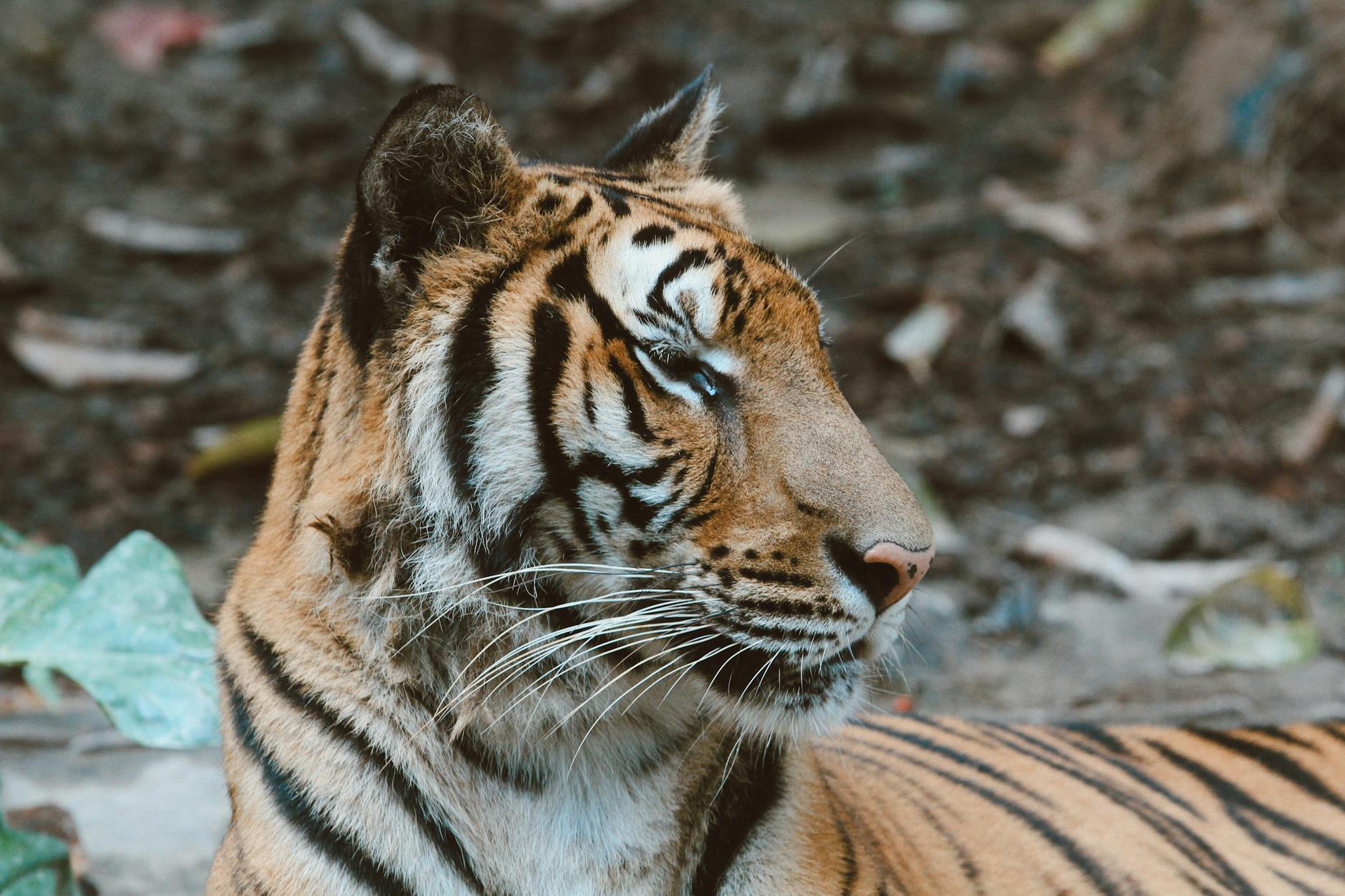
Most people meet a cartoon tiger long before a real one. Tigers sell breakfast cereal, lead children’s stories and front sports teams in America and Asia. This page takes four of the best known, Shere Khan, Tigger, Tony and Richard Parker, and sets out where each came from, what it borrows from the real animal and what it leaves out.
Key facts
- Tony the Tiger debuted in 1952 as the mascot for Kellogg’s Frosted Flakes
- Tigger first appeared in A.A. Milne’s The House at Pooh Corner in 1928
- Shere Khan is a Bengal tiger antagonist in Kipling’s The Jungle Book (1894)
- Richard Parker, the tiger in Life of Pi (2001), is a Bengal tiger
- The earliest known use of “Tigers” for Detroit’s baseball club is a Detroit Free Press report of 16 April 1895
The table sets the four side by side.
| Tiger | First appeared | Created by | Taken from the real animal | Left out |
|---|---|---|---|---|
| Shere Khan | The Jungle Book, 1894 | Rudyard Kipling | A lame tiger that takes easy prey | Solitude: he keeps a jackal follower, Tabaqui |
| Tigger | The House at Pooh Corner, 1928 | A. A. Milne | The stripes | Hunting, territory and the solitary habit |
| Tony the Tiger | Kellogg’s Frosted Flakes advertising, 1952 | Leo Burnett agency | Colour, stripes and size | Solitude: he has a son and a daughter |
| Richard Parker | Life of Pi, 2001 (film 2012) | Yann Martel; film by Ang Lee | Wildness: he is never tamed and leaves without looking back | Very little |
Shere Khan: the villain who set the template
Shere Khan, in Rudyard Kipling’s The Jungle Book (1894), is the model for the tiger in English fiction. He is the enemy of Mowgli’s wolf pack and a threat through the stories. Kipling was born in Bombay in 1865, was sent to England at five, and came back in 1882 to work on newspapers in India. The name joins sher, the Hindustani word for tiger, to Khan, a title of rank.
The character is lame. In “Mowgli’s Brothers” Mother Wolf calls him Lungri, the Lame One, says he has been lame in one foot from birth, and gives that as the reason he has only killed cattle. The detail anticipated something real. Jim Corbett’s later examinations of man-eating tigers repeatedly found old injuries that had made normal hunting impossible. Corbett shot the Champawat tigress in 1907, thirteen years after the book came out, so Kipling cannot have drawn on that case. See our piece on the Champawat tigress for the documented version.
Disney filmed the story in 1967, 1994 and 2016, and fixed the type: the tiger as cunning, dangerous aristocrat of the forest. Real tigers are solitary hunters that mostly avoid people.
Tigger: the tiger as bounce
Tigger arrived in 1928 in A. A. Milne’s The House at Pooh Corner and reached his largest audience through Disney’s Winnie-the-Pooh films from the late 1960s onward. He is the tiger reduced to a single trait: bounce. He is friendly and excitable, with none of the menace, the territory or the solitary habit.
Milne wrote in England between the wars, a long way from any wild tiger, and the species barely matters to the joke.
Tony the Tiger: the mascot that ate the mental image
Tony the Tiger debuted in 1952 for Kellogg’s Frosted Flakes, in advertising made by the Leo Burnett agency. He began as one of four candidate mascots and beat Katy the Kangaroo, Elmo the Elephant and Newt the Gnu in a popularity contest. The first Tony had a football-shaped head and often walked on all fours. He was later redrawn upright and muscular. Thurl Ravenscroft voiced him for about fifty years, until his death in 2005.
What Tony takes from the real animal is the look: orange, stripes, a big head, big teeth. Almost nothing else survives. He has a son, Tony Jr., and a daughter, Antoinette. He has a sports coach’s manner and sells sweetened cereal to children. The solitary, secretive and sometimes lethal animal is filtered out, because the job calls for a friendly tiger.
Tony has been on cereal boxes for more than seventy years, so for a great many children he was the first tiger they knew.
Richard Parker: the tiger as a tiger
Yann Martel’s Life of Pi (2001), and Ang Lee’s 2012 film of it, put a Bengal tiger named Richard Parker on a Pacific lifeboat with an Indian boy. The film’s tiger is unusually well observed. The effects house Rhythm & Hues filmed real tigers for reference and built a digital animal for the rest: real tigers appear in about 14 percent of the tiger shots and the digital one in about 86 percent. The work won the Academy Award for visual effects.
Richard Parker is one of the few popular tigers treated as an animal. He never becomes a friend or a sidekick. When the lifeboat reaches Mexico after 227 days he walks into the jungle without looking back, and Pi weeps because the tiger left without any goodbye.
Sports mascots
Tigers are among the most used animals in sports branding. The earliest known use of “Tigers” for Detroit’s baseball club is a Detroit Free Press report of 16 April 1895, when the club played in the Western League. Other American examples include the Cincinnati Bengals and the LSU, Memphis, Auburn and Princeton Tigers. In Asia, the Kia Tigers (formerly the Haitai Tigers) have played Korean professional baseball since 1982, Japan’s Hanshin Tigers were founded in Osaka in December 1935, and the Bangladesh national cricket team is known as the Tigers after the Royal Bengal tiger.
The visual appeal is plain: tigers are large, boldly patterned and recognisable at a glance. In much of Asia the tiger is already the local emblem of strength (see our piece on tigers in folklore and mythology), and sports teams inherit that meaning.
Two symbols sometimes taken for tigers are lions. The Singha beer logo is a singha, the mythical lion of Thai tradition. Sri Lanka’s national and cricketing emblem is a lion holding a sword, and the island has no wild tigers, as our page on tigers in Sri Lanka explains.
None of the American clubs has a local tiger behind it, and neither does Osaka: there are no wild tigers in Japan. Outside the tiger’s range, the sporting tiger is a borrowed symbol.
What the popular-culture tiger misses
- Solitude. Tony has a family. Tigger has Pooh. Shere Khan has the jackal Tabaqui. Real adult tigers live alone.
- Rarity. None of these stories mentions that wild tigers numbered 5,574 on the Global Tiger Forum’s 2023 count and survive in a small part of their former range, a loss we cover in habitat loss and tiger survival.
- Which tiger. Shere Khan and Richard Parker are both Bengal tigers. Amur, Sumatran, Malayan and Indochinese tigers rarely get a part.
What it gets right
Some of it holds up. Kipling’s lame cattle-killer matches what Corbett later found in real man-eaters, and Richard Parker stays a wild animal to the last page.
For the wild tigers behind the brand tigers, see our pieces on famous wild tigers and their stories and tiger conservation.
FAQs
Who created Shere Khan?
Rudyard Kipling, in The Jungle Book (1894). The name joins sher, the Hindustani word for tiger, to the title Khan. Kipling was born in Bombay and worked as a journalist in India from 1882.
When did Tony the Tiger first appear?
1952, in advertising for Kellogg’s Frosted Flakes. He has been the brand’s primary mascot ever since.
Is Tigger really a tiger?
In A.A. Milne’s stories he is described as one, but in practice he is a comic invention with a single trait and very little resemblance to the actual animal.
Was Richard Parker a real tiger?
The character is fictional. For Ang Lee’s 2012 film the effects team filmed real tigers for reference and used a digital tiger in about 86 percent of the tiger shots.
Is the Singha beer logo a tiger?
No. Singha means lion. The logo is the mythical lion of Thai tradition.
Which tiger subspecies is most often depicted in popular culture?
The Bengal, by a wide margin. Amur, Sumatran, Malayan and Indochinese tigers barely appear in Western mainstream media.
Sources
- Internet Archive: Rudyard Kipling, The Jungle Book (The Century Co., 1894)
- The Kipling Society: Rudyard Kipling 1865-1936
- Internet Archive: A. A. Milne, The House at Pooh Corner (1928)
- Advertising Week: Why Frosted Flakes’ Tony the Tiger Is the Greatest Cereal Mascot Of All Time
- NPR: Thurl ‘Tony the Tiger’ Ravenscroft Dies at 91
- Mental Floss: 10 Parents, Kids and Spouses of Popular Advertising Characters
- Animation Magazine: Building a Beguiling Bengal Tiger
- RIT: Alumni work on Academy Award-winning ‘Life of Pi’
- MLB.com: Detroit Tigers team name origin
- WBSC: Hanshin Tigers Japan Series title ends Curse of the Colonel
- Global Tiger Forum: Press release, International Tiger Day 2023
Updated 13 September 2026: corrected the origin of Shere Khan’s name and the date of the Detroit Tigers nickname.
Updated 15 November 2026: corrected Kipling’s biography and the ending of Life of Pi, added sources for Tony the Tiger and the sports team names, and removed claims we could not source.
Updated 18 November 2026: added Disney’s 1994 Jungle Book.
Updated 28 November 2026: added a sources list, corrected the Life of Pi shot figures, and removed an unsourced claim about the Hanshin Tigers name.


My son is 5 and when I asked him to draw a tiger he drew Tony with the scarf thing. so yes.
Life of Pi is the only one where the tiger stays a tiger. I remember being almost angry at the end of the book that he just walks into the jungle without looking back. Now I think it’s the best part.
wait the logos are LIONS?? 😭