
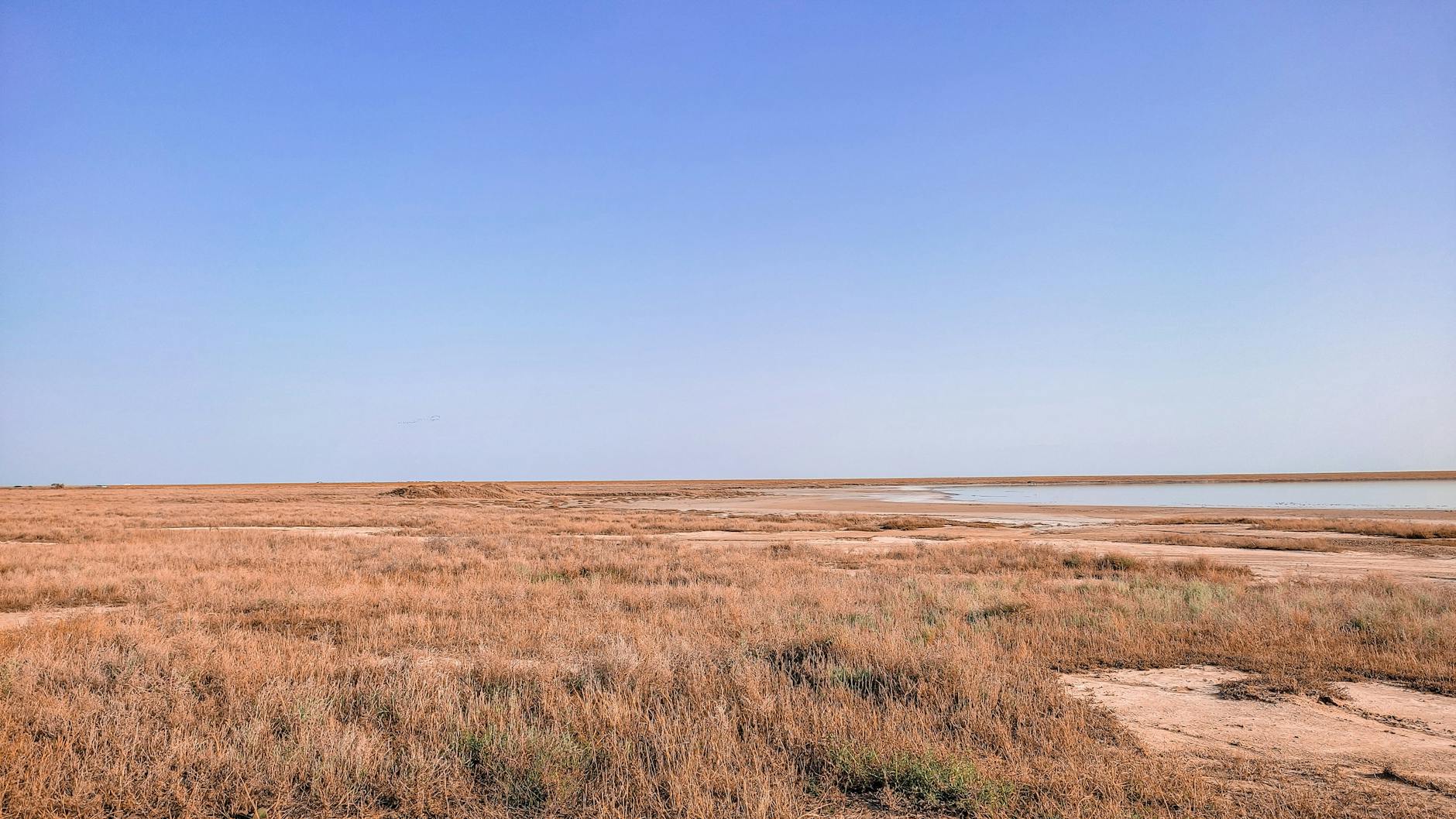
Kazakhstan has wild tigers again. The last of its own was recorded in the Ili delta in 1948. On 31 July 2026 a wild-caught Amur tigress named Umit was released into the Ile-Balkhash State Nature Reserve, and on 31 October the adult male brought from Russia with her followed, as reported by the Times of Central Asia. Two cubs from the same group are due out in 2027. The animals are Amur tigers because the Caspian tiger that lived here is extinct and the Amur is its closest living relative.
| Status | Former range state. Reintroduction under way, with the first release on 31 July 2026. |
|---|---|
| Subspecies | Historically Caspian tiger (Panthera tigris virgata), which a 2009 genetic study found to differ from the Amur tiger by a single mutation in the mitochondrial DNA it compared. Amur tigers are the reintroduction stock. |
| Current wild population | Two released tigers in November 2026: the female Umit (31 July 2026) and the male Amur (31 October 2026, per the Times of Central Asia). Two cubs and a captive breeding pair remain in enclosures. |
Current status
Six tigers are in the Ile-Balkhash reserve, in three groups. Two are free. Umit, an adult female of three to four years, was released on 31 July 2026 wearing a satellite collar that reports her position every 12 hours. The Astana Times reported that her first recorded kill was a wolf, followed some days later by a wild boar, and in early November the ecology ministry said she was hunting for herself and had settled a home range (more on tiger territory and range). The adult male, named Amur, had been held back in July for behavioural tests. The Times of Central Asia reported his release, also collared, on 31 October 2026.
Two are cubs. Turan, a male, and Ussuri, a female, were orphans of six or seven months when they arrived. They are being raised in enclosures and are due for release in 2027. Sergey Aramilev of Russia’s Amur Tiger Centre has named May, and Kazakh officials say the date depends on how the cubs develop.
The last two were never meant to leave. Kuma, a male born in 2015, and Bogdana, a female, came from the Stichting Leeuw sanctuary in the Netherlands on 22 September 2024 to breed, with their cubs intended for release. No cubs had been born by August 2026. The ecology minister said in March 2026 that mating had taken place without fertilisation.
All four Russian tigers were caught wild in Khabarovsk Krai (see Russia’s Amur tiger recovery for the source population) and flown to Almaty in late May 2026, then taken to the reserve by helicopter. No attack on livestock or people had been reported by early November 2026, according to Radio Free Europe/Radio Liberty. It also found unease among residents: one local business owner told it that most people in the area opposed the project. Residents are to get automatic text warnings when a collared tiger comes within five kilometres of a village.
Timeline of the return
| Date | Event |
|---|---|
| 1891 | Organised hunts using soldiers begin, on WWF Central Asia’s account. Bounties are paid until 1929. |
| 1948 | Last tiger recorded, in the Ili delta. |
| 8 September 2017 | Kazakhstan and WWF sign a memorandum on tiger reintroduction at EXPO-2017 in Astana. |
| 27 June 2018 | The Ile-Balkhash State Nature Reserve is created, at 415,164 hectares. |
| 22 September 2024 | Kuma and Bogdana arrive from the Netherlands as breeding stock. |
| 12 November 2025 | Kazakh and Russian ministers sign the plan to bring wild-caught tigers from Russia. |
| 10 February 2026 | A decree enlarging the reserve by 35,088 hectares, to 450,253, comes into force. |
| Late May 2026 | Four wild-caught tigers arrive from Khabarovsk Krai. |
| 31 July 2026 | Umit, the adult female, is released. |
| 31 October 2026 | Amur, the adult male, is released (Times of Central Asia). |
| 2027 (planned) | Release of the cubs Turan and Ussuri. |
A short history of tigers in Kazakhstan
Caspian tigers lived in the tugai: dense tamarisk, reed and poplar thickets along the Ili and Syr Darya and around Lake Balkhash. They were hunted out as policy. Hunts using soldiers began in 1891 and bounties were paid until 1929. The riverine forest was cut and the ground put under rice and cotton, which took away the cover and the boar and deer with it. The last Kazakh tiger on record was in the Ili delta in 1948.
The choice of Amur tigers rests on a 2009 genetic study led by Carlos Driscoll. It found that Caspian tigers carried a mitochondrial sequence one mutation away from the single sequence found in living Amur tigers, and concluded that the two were one population whose range was broken up only within the last 200 years, probably by people. The Amur is the nearest living thing to the animal Kazakhstan lost.
The reserve and its prey
Ile-Balkhash covers the Ili river delta, the tugai and saxaul forest along it, and the wetlands at the southern end of Lake Balkhash. It was created in 2018 and enlarged in February 2026 to just over 450,000 hectares. Tigers came last. From 2018 the reserve was stocked with prey (see what tigers eat). By the ecology ministry’s figures in November 2026, more than 200 Bukhara deer and 140 kulans had been moved in, the kulans from Altyn Emel National Park upriver. Wild boar and roe deer were breeding there already.
The programme is run by Kazakhstan’s Forestry and Wildlife Committee with WWF. WWF provides a significant share of the money, with the rest from UNDP and the state budget, according to the Astana Times.
The targets depend on who is asked. WWF’s goal, set out in 2024, is about 50 wild tigers by 2035. Kazakh officials quoted in November 2026 spoke of releasing around 10 tigers by 2033, and the head of the forestry committee has called it an effort of 40 to 50 years.
What is still unresolved
Kazakhstan did the work in order: land protected in 2018, prey rebuilt over eight years, predators added in 2026. WWF Central Asia says that, if the project succeeds, Kazakhstan “will become one of the first countries in the world to bring back the tiger to a region where it was completely eradicated”.
Three things are not yet known. The first is whether tigers from the Khabarovsk forest settle in a delta that is hotter, drier and more open. Umit’s first months are encouraging, and they are one animal’s record. The second is whether collared tigers stay clear of livestock and villages once there are more of them. The third is breeding. Two wild adults, two cubs and a captive pair that has not yet produced young are a narrow base, and the ministry has said that further imports from Russia remain an open question.
Related reading
- Amur tiger profile
- The living tiger subspecies, and the extinct ones
- Tiger conservation: where we stand
- External authority: WWF Central Asia on the tiger’s return
Frequently asked questions
Are there wild tigers in Kazakhstan?
Yes. Umit, an adult female caught in Russia’s Khabarovsk region, was released into the Ile-Balkhash reserve on 31 July 2026, and the Times of Central Asia reported the release of the adult male, Amur, on 31 October. Two cubs from the same group remain in enclosures. Before that the country had gone without wild tigers since 1948.
Why use Amur tigers rather than Caspian ones?
The Caspian tiger is extinct. A 2009 mitochondrial study found it and the Amur tiger were one population until about 200 years ago, so the Amur is the closest living match to what Kazakhstan lost.
Where are the tigers being released?
The Ile-Balkhash State Nature Reserve, covering the Ili river delta and the southern shore of Lake Balkhash. It was created in 2018 at about 415,000 hectares and enlarged in February 2026 to about 450,000.
How many tigers is the programme aiming for?
WWF’s goal is about 50 wild tigers by 2035. Kazakh officials spoke in November 2026 of around 10 released by 2033, within an effort they expect to last 40 to 50 years.
What happened to the two tigers that came from the Netherlands?
Kuma and Bogdana arrived from the Stichting Leeuw sanctuary on 22 September 2024 and will spend their lives in an enclosure inside the reserve. They were brought in to breed, with their cubs to be released. None had been born by August 2026.
When did Kazakhstan lose its own tigers?
The last Kazakh tiger on record was seen in the Ili delta in 1948, after organised hunts that began in 1891 and the clearance of the riverine forest for rice and cotton.
More tiger countries
The decline that emptied Kazakhstan did not stop at the border. Russia, Mongolia, China and Pakistan show how unevenly it fell.
- Tigers in Russia (wild tigers today)
- Tigers in Mongolia (wild tigers lost)
- Tigers in China (wild tigers today)
- Tigers in Pakistan (wild tigers lost)
All 25, grouped by whether tigers still live there: tigers by country.
Hero image: photo by Constantin Chernishov on Pexels.
Updated 13 September 2026: corrected the release timeline: the first tiger, Umit, was released on 31 July 2026.
Updated 15 November 2026: added the second release (31 October 2026), the tigers’ names, the reserve’s 2026 enlargement and the cubs’ planned 2027 release, and corrected the programme targets and prey figures.