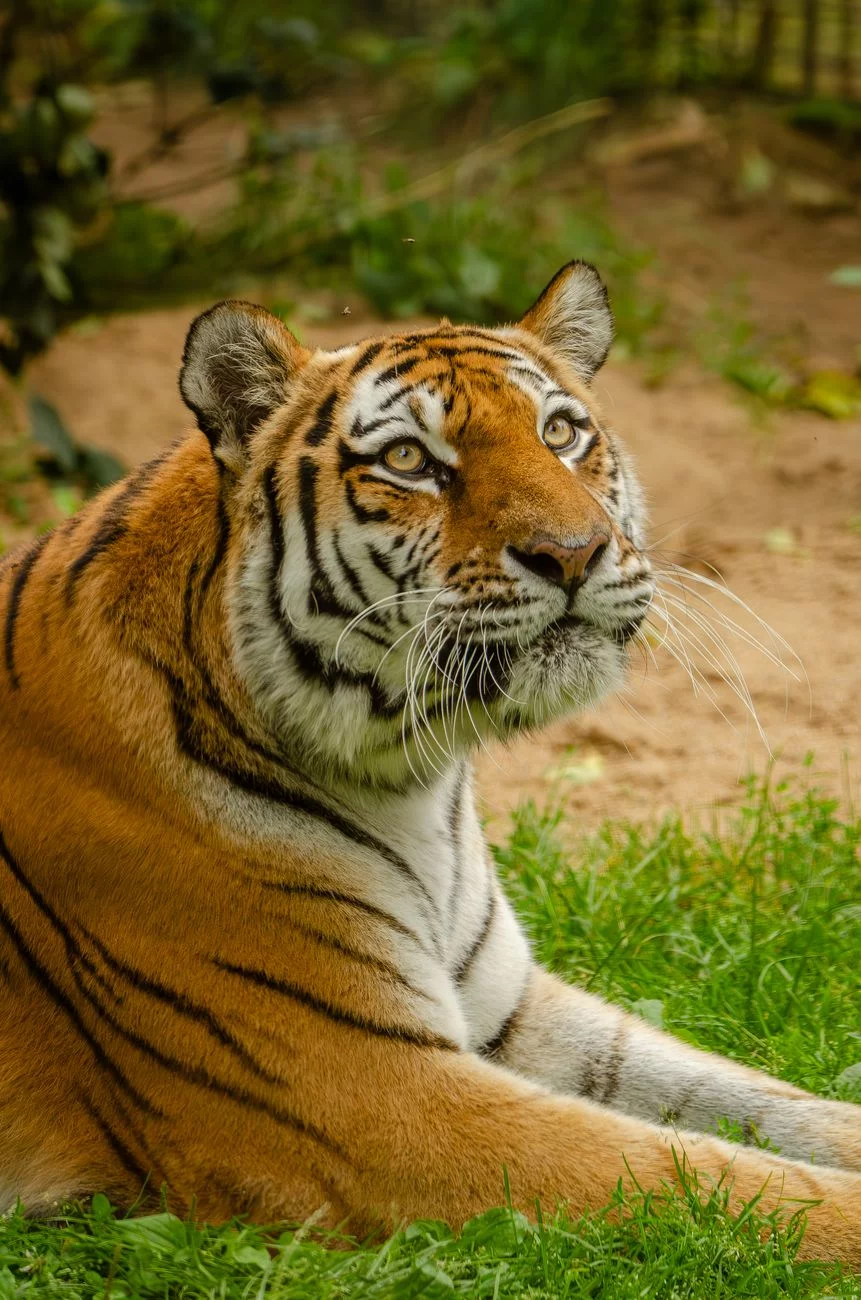
Ask people when tigers are active and most will say night. The camera trap record is more interesting than that. Tigers in Nepal turn up at every hour of the day, and the pattern shifts with the season, the temperature and even how many people are about.
Most of what we know comes from automatic cameras that photograph anything warm that walks past. The longest recent run is a five-year survey in Bardia National Park, Nepal, with 50 cameras on a 1.4 km by 1.4 km grid from May 2019 to April 2024. Our post on how camera traps count wild tigers explains how the stripes are used to tell animals apart. Here the interest is in the time stamps.
Active around the clock, with two peaks
The Bardia researchers call the tiger cathemeral. That means active through the whole 24 hours, in every season, with no fixed night shift or day shift. The tiger activity pattern still has shape. In the cool dry season, tigers peaked around sunrise and sunset, with extra activity at night.
The hot dry season looked different. Activity peaked slightly later after sunrise, then again between sunset and midnight. In the wet season the study found no strong peak at all.
Why tigers slow down at midday
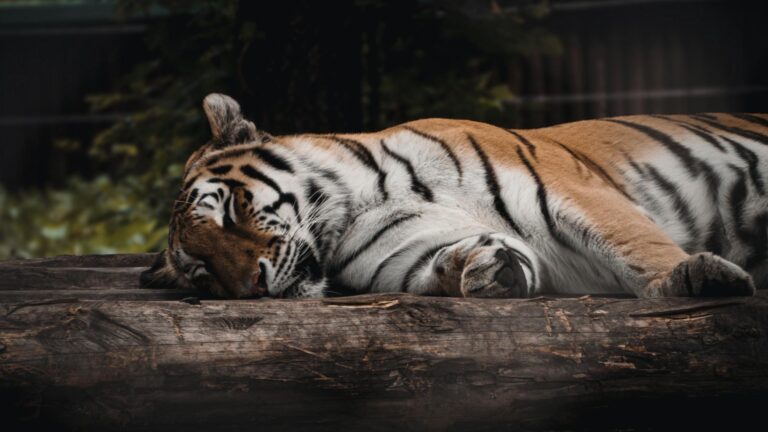
Heat explains a lot of it. In Bardia, midday temperatures in the hot dry season usually run high between 12:00 and 15:00. Tigers cut their activity in those hours, and so did most of the deer. The authors describe this as behavioural thermoregulation, a way of coping with heat by choosing when to move.
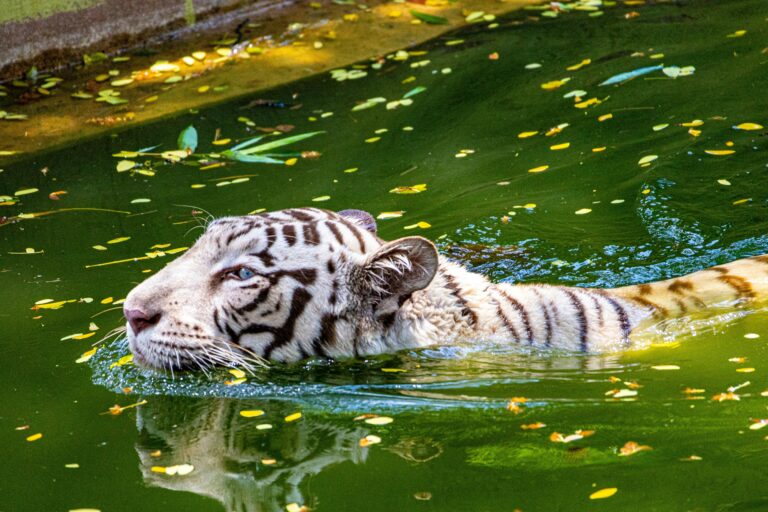
The study does not say where the tigers spent those hours. Tigers do swim readily, which our post on whether tigers can swim covers.
Prey keep a similar clock
Tigers do not hunt on a separate schedule from their prey. In the Bardia data, sambar were cathemeral like the tigers. Chital and muntjac were crepuscular, with peaks around dawn and dusk. Hog deer were mostly diurnal. The paper reports substantial overlap between tiger and deer activity, which it says makes predation hard for the deer to avoid. The authors link the lack of separation to the high tiger density in the park.
One detail stands out. Hog deer stayed active through the hottest hours of the hot dry season, when tiger activity was lowest. The authors say this could mean high heat tolerance or a way of avoiding tigers in time. The data cannot yet tell which.
Overlap does not mean a kill every night. The Smithsonian’s National Zoo says tigers hunt about once a week and can eat as much as 75 pounds (34 kilograms) in one night. Our post on how tigers hunt covers the stalk and the ambush that sit behind those rare meals.
Tigers adjust to leopards
A tiger’s clock also shapes the lives of the smaller cats around it. In Parsa National Park, Nepal, researchers used 157 camera sites on 2 km by 2 km cells. They found that leopards avoid peak tiger activity periods. The study suggests this reduces competition between the two. Both cats were photographed at 44 of the same camera locations, so they share ground and keep apart in time.
The same study estimated 1.25 tigers and 3.09 leopards per 100 square kilometres. Our tiger vs leopard field guide compares the two cats side by side.
People push tigers toward the night
Human activity changes the clock too. A two-year camera study at more than 300 sites in northeast China found that tigers, but not leopards, shifted toward more nocturnal activity where humans were passing by day. That cut the overlap between tigers and their hoofed prey at the more disturbed sites.
So a nocturnal tiger is not always a tiger doing what comes naturally. In some places it may be a tiger working around people. That matters for conservation, because less overlap with prey can mean harder hunting.
What this means for protection
Timing data has a practical use. The Bardia authors note that knowing when wildlife is active can inform the scheduling of anti-poaching patrols, so rangers can concentrate effort in the hours when animals move most.
The honest limit is that these are camera records from a few parks. A photo shows a tiger passing a camera, not what it did next, and a tiger that rests in thick cover may never be photographed. The pattern is a good guide, not a timetable.
If you have watched tigers in the wild or in a reserve and noticed when they move, add what you saw in the comments.
Sources
- Activity Patterns and Predator-Prey Temporal Overlap in the High Tiger-Density Area Bardia National Park, Nepal, Ecology and Evolution (2026)
- Fear of humans mediates spatiotemporal interactions between endangered large Asian felids, Proceedings of the Royal Society B (2026)
- Coexistence of Sympatric Large Carnivores: Spatio-Temporal Interactions Between Tigers and Leopards in Parsa National Park, Ecology and Evolution (2025)
- Tiger, Smithsonian National Zoo and Conservation Biology Institute